


Shawna Chase brings a rare combination of gifts to the work of social impact: the soul of an artist, the discipline of a systems thinker and the practical experience of a seasoned product leader. Through ImpactMS and Livin’in, she is building civic infrastructure designed to help organizations see whether their community investments are truly reaching the people they are intended to serve.
What I appreciate most about Shawna’s work is that she begins not with the funder’s question—“Did the money work?”—but with the community member’s question: “Did the system reach me?” That shift matters. It reframes impact measurement as an exercise in access, dignity and agency.
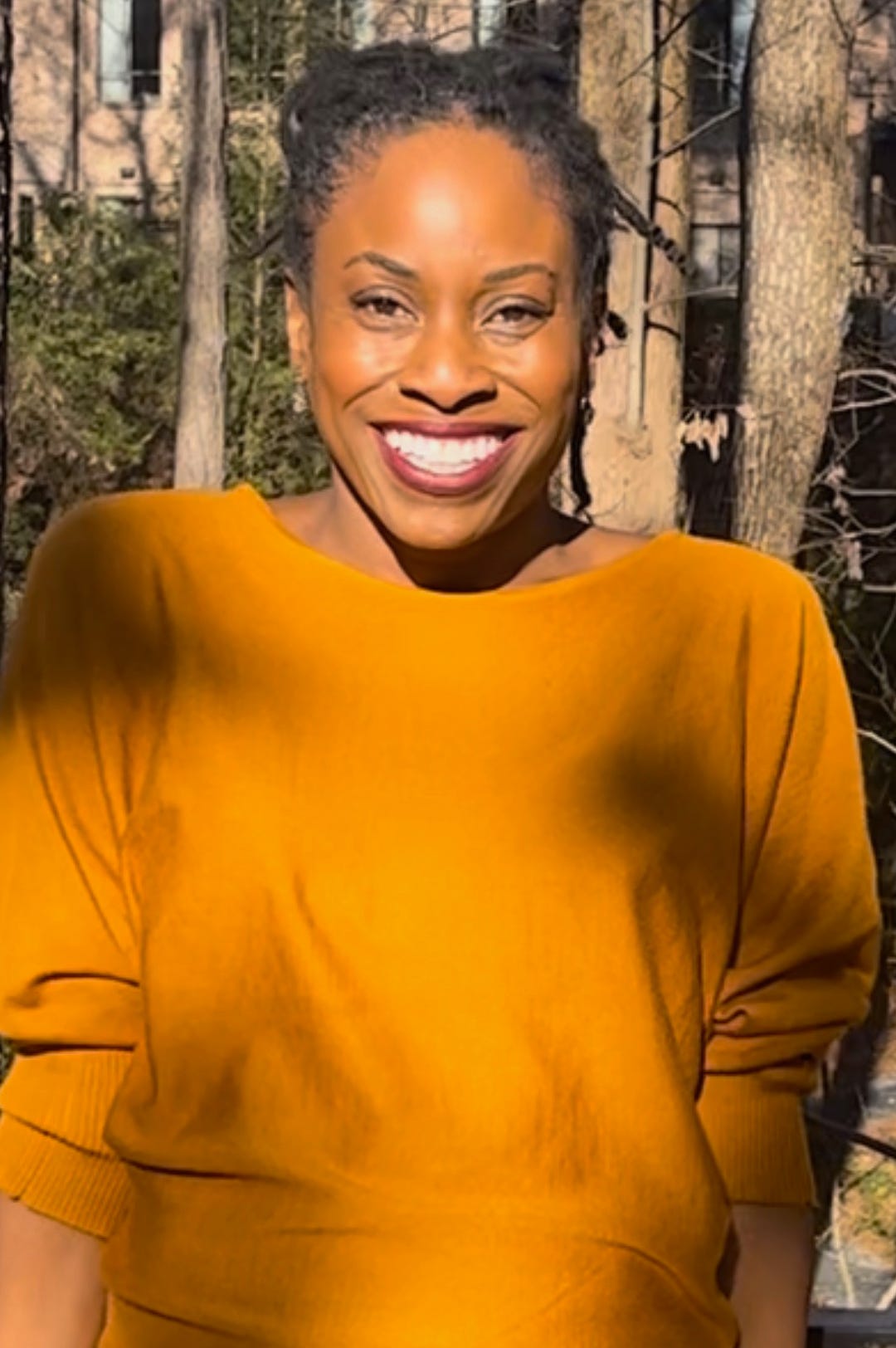
In this SuperCrowd Voices conversation, Shawna explains how the arts, technology and thoughtful design can help communities overcome barriers of discovery, trust, context and friction—and build systems that start with people.
An Interview with Shawna Chase
What inspired you to start your company?
If Devin asked me to name my superpower, I’d say I’m an artist who happens to think in systems.
I love music and theatre most. Learning the language of music theory as a child meant I could teach myself most of the instruments I explored, because once you have the language underneath, the instruments become dialects.
Music trained my ear for structure. Theatre trained my eye for execution—I studied production in college and joined community projects in life, and what I learned was how a team of people coordinates in real time to hold a live experience together for an audience that never sees the architecture.
What the arts trained in me was perception, and it’s the foundation of everything I’ve built since.
The CS and Math degree came next. Then two decades of product leadership—Six Sigma, PMP, Agile, teams managed across verticals. I was good at understanding how a process was supposed to work, mapping where it actually broke, building the infrastructure that closed the gap.
Early in my career, I had to create a test Facebook account for work. The platform aggregated information about me that was far too accurate given the minimal data I’d provided. I deleted the account after the project, but that moment set the stage for how I’d treat my data—and my attention—from then on. I understood what I was looking at, i.e., design intent pointed at extraction. The architecture was working exactly as designed. It just wasn’t designed for me.
(Most architecture isn’t—and that insight scaled to everything.)
What problem are you solving, and who benefits most from your solution?
We sign terms and conditions every day without reading them—agreements that were never written to protect us. By the time most people turn twenty-one, their data has been parsed, packaged, and priced across platforms, data brokers, and systems that calculate human beings by lifetime value. LTV. That’s what a person is worth in the architecture most of us inhabit.
We have lost access to our rights and our agency. Most of us lost it before we were old enough to understand what was taken.
One question rose above every other: How do we restore access to the individual?
The arts carry the skills we need to heal, learn, organize, adapt, and grow together through shared experience. They help us come together. They keep us centered on our humanity—on what makes us irreducible in a system that would rather calculate us. The arts are the oldest infrastructure we have.
Livin’in is a civic infrastructure platform. Through ImpactMS, I design solutions for social impact—the systems, agents, and dashboards that make it possible for organizations to see where their community investment actually lands and where it breaks down. Communities invest enormous resources in programs, services, and infrastructure meant to reach people. Most of that investment is invisible to the people it’s supposed to serve—and unmeasurable by the organizations doing the investing. I design the architecture that sits between a community investment and a community outcome, so organizations can stop guessing and start seeing.
The communities who benefit most are the ones who’ve been over-studied, under-resourced, and systematically designed around. Underserved neighborhoods, under-connected arts ecosystems, populations navigating housing, health, and workforce systems that were never built with them in mind.
What makes your company stand out in your space or industry?
Most impact measurement starts with the funder’s question: Did the money work? I start with the community member’s experience: did the system reach you?
That distinction shapes everything I design. We experience four dimensions where the pathway between a resource and the person who needs it breaks down: Discovery—people can’t find what exists. Trust—it hasn’t been earned. Context—the information doesn’t meet people where they are. Friction—the process has too many barriers. These are design failures, and they’re predictable.
What’s unusual is where the practice comes from. I’ve spent a career in product management, certified in Six Sigma and project management, deeply rooted in the arts and theatre production. Each of those disciplines is a practice of designing experiences that work for the people inside them. A production team coordinating lighting, sound, staging, and live performance in real time—making something feel seamless for an audience that never sees the architecture—that’s operational execution at its most human. A Six Sigma process engineer diagnosing where a system breaks and redesigning the flow—that’s the same practice in a different room.
I bring both rooms to the work. No organization I’ve found sits at the intersection of arts-as-connective-tissue, community-member-perspective measurement, and civic access design. That’s where ImpactMS lives.
What’s next for your company—what are you most excited to build or accomplish in the future?
The first pilots.
I’ve built the design framework—a diagnostic that maps broken pathways across Discovery, Trust, Context, and Friction. I’ve built the platform prototype—Livin’in, which reimagines how community members connect to local resources by starting from their expressed needs rather than an organization’s service categories. I’ve been publishing Livin’in: Weekly, a newsletter that tracks what’s broken, what’s working, and what’s possible across arts, technology, and culture as community infrastructure.
What comes next is putting the design work into the field. I’m pursuing pilot partnerships with community-serving organizations in Atlanta—designing impact measurement systems from the ground up with them, producing dashboards that make their community investment visible, and building the connective agents between parts of their ecosystem that currently operate in isolation.
I’m also building Bridge to Commons, a 501(c)(3) nonprofit that will prepare communities for participation in community wealth-building economies—the cooperative, democratic enterprise, and local finance models that keep wealth circulating locally instead of extracting it. The design practice and the nonprofit are two instruments of the same mission: the design practice builds the institution’s capacity to see and serve. The nonprofit builds the community’s capacity to participate, hold power and build new capabilities.
What’s one lesson you’ve learned on your entrepreneurial journey that might help others?
I spent two months deliberately pressure-testing a consulting identity. I have the credentials, the methodology, and the toolkit from experience but chose the designer path instead.
I needed that phase because it’s how I learned the practice deeply enough to see where the identity didn’t align with how I actually work. The logic was sound—the market needed it, the framework was strong—but the operating rhythm couldn’t become disciplined because it required a different kind of energy—and that was an important signal to notice and follow.
I’m a designer. A consultant is a hired expert who assesses and advises. A designer is an architect who builds what should exist. Those require different energy, different relationships, different rhythms of work. I was trying to deliver designer-quality output through a consultant’s identity, and the identity was the part that didn’t fit.
The lesson I learned: if your positioning makes perfect logical sense and you still can’t settle into the work, the problem might not be discipline. You might be describing yourself in someone else’s language. The work knows what it is before you do—listen to the resistance. It’s data.
Why might someone want to learn more about your offering or follow your progress?
If you’re an investor, sponsor, or organization working in the impact space, I design impact measurement pilots from the ground up—the systems that show you where your community investment lands and where it doesn’t. If you need that visibility, I’d love to talk.
If you’re a founder or a builder, the Livin’in: Weekly newsletter tracks the problem space across arts, technology, and culture—it’s a weekly record of what’s broken, what’s working, and what’s possible. The intellectual work behind the design practice lives there, in public.
If you’re someone who reads this and wants to get involved, connect with me directly. I’m better in conversation than on a feed.
Shawna Chase’s Bio
Shawna Chase is the founder of ImpactMS, a social impact design practice, and Livin’in, a civic infrastructure platform. Through ImpactMS she designs solutions for social impact—the pilots, agents, and dashboards that show organizations where their community investment lands and where it doesn’t. Her background spans a CS and Math degree, two decades of product leadership (Six Sigma, PMP, Agile), and a lifelong practice in the arts—classical piano, theatre production, dance, and multi-instrument study. She writes Livin’in: Weekly, a Substack newsletter exploring arts, technology, and culture as community infrastructure. She is based in Atlanta.
Links:
Livin’in: Weekly (Substack): livininapp.substack.com
LinkedIn: linkedin.com/in/shawnachase
ImpactMS: impactms.org
