


We are pleased to share this SuperCrowd Voices from the Community post with you. SuperCrowd Voices posts represent the views of our guest authors, not The Super Crowd, Inc., a public benefit corporation. Manage the volume of emails you receive from us by clicking here. Interested in sharing your voice? Click here.
Dr. Martin Luther King Jr. once said, “Of all the forms of inequality, injustice in healthcare is the most shocking and inhumane.”
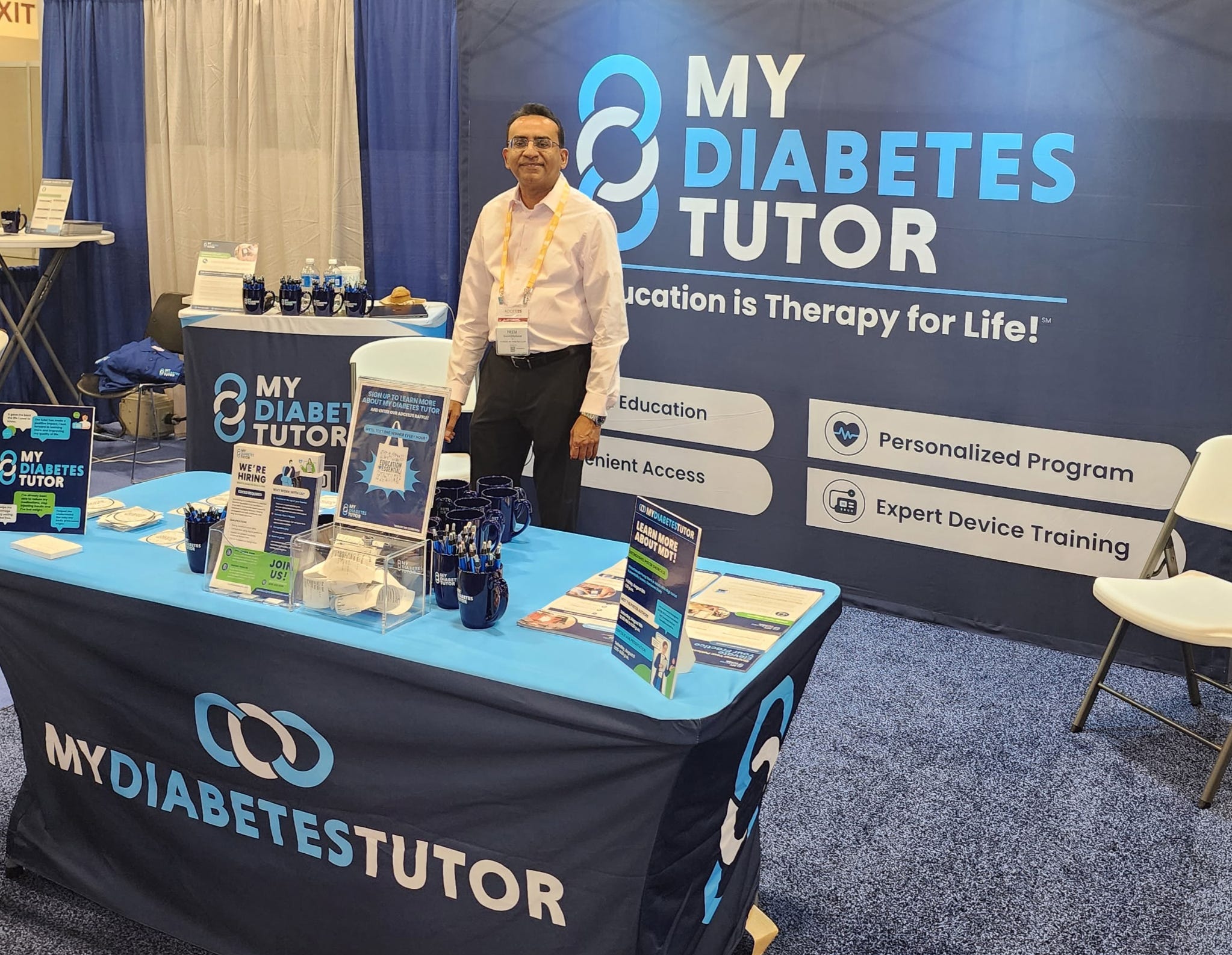
That quote has followed me for years because I’ve lived it alongside my patients.
I’m an endocrinologist. I’ve spent two decades working with people who are doing their best to manage diabetes while juggling everything else life throws at them: jobs, children, financial stress, lack of transportation, unstable access to healthy food, language barriers, and too often, a healthcare system that expects them to figure it all out on their own.
The story of My Diabetes Tutor didn’t start in a boardroom or a pitch deck. It started in California’s Central Valley.
If you know the Central Valley, you know it’s beautiful, hard-working, and underserved. It’s a place where people show up for their families and their communities, even when the resources don’t show up for them.
I built a practice there and ended up consulting more than 35,000 patients over time. And what I learned quickly was this: If I wanted my patients to succeed, the best thing I could give them wasn’t another medication. It was education.
By 2018, I had two full-time diabetes educators on staff. The impact wasn’t subtle. When patients truly understand what’s happening in their bodies, what their numbers mean, and how to respond without fear or confusion, everything changes.
I’ll never forget the look on a patient’s face when she admitted she’d been afraid to use her insulin because no one had shown her how. She wasn’t careless. She was terrified. That moment stayed with me, because it wasn’t about effort. It was about support.
But then something happened that forced me to see the bigger problem. Those educators retired. And when I tried to replace them, I couldn’t.
Not because diabetes educators aren’t out there. But recruiting specialized talent to rural communities is incredibly difficult. And my patients couldn’t just “drive to the nearest program,” because for many of them, the nearest program might as well have been in another universe.
That was the moment I stopped thinking about this as my staffing issue and started seeing it for what it really was: a national access crisis.
We’ve created a system where education is optional, and that’s dangerous.
When people talk about healthcare access, they tend to focus on doctors. But diabetes care is not only about endocrinologists. Diabetes is won or lost in the day-to-day details.
It’s won in the moments where a patient decides what to eat, how to take their meds, what to do when their blood sugar is high or low, how to avoid dangerous patterns, how to use technology, and how to bounce back when they’ve had a hard week.
That kind of support is supposed to come from diabetes education programs. Yet, huge portions of this country simply don’t have them.
62% of non-metropolitan counties in the United States lack a diabetes education program entirely. And even when programs exist, access is often limited by geography, transportation, scheduling, and language barriers.
Here’s another number that still shocks me: Only 5% to 7% of people with diabetes receive education during their first year after diagnosis.
Think about that.
We diagnose someone with a life-altering condition… and then we send them out into the world without teaching them how to live with it. And then we wonder why people struggle.
That’s not a gap in the system. That is the system.
So I built My Diabetes Tutor.
In 2019, I decided to build a solution that didn’t rely on geography. That’s how My Diabetes Tutor was born. I didn’t want to build something flashy. I wanted to build something effective.
In chronic disease management, “social determinants of health” aren’t abstract concepts. They are real barriers that decide outcomes:
Transportation
Language
Limited access to specialty care
Lack of local resources
Competing life responsibilities
Burnout and overwhelm
A history of being dismissed by the system
And when those barriers pile up, it doesn’t matter how advanced the medication is. Patients still get left behind.
True equity means we stop pretending everyone starts at the same line. It means we build care that meets people exactly where they are.
Health equity isn’t a slogan. It’s our operating system.
I’m proud to say that equity isn’t something we added later at My Diabetes Tutor. It’s baked into how we work. We focus on three things that sound simple, but are surprisingly rare in practice:
First, we dismantle barriers.
We provide virtual, scalable education so patients can access support without needing transportation, childcare, or hours off work.
Second, we prioritize cultural competency.
Education doesn’t work if it doesn’t connect. Our tutors reflect the communities we serve and understand the lived experiences of the patients who need support the most. That trust is not “nice to have.” It’s the difference between engagement and dropout.
Third, we insist on clinical results.
This is not just about good intentions. It has to work. The national average A1C reduction for diabetes education is around 0.73 points. We’ve demonstrated an average A1C reduction of 1.6 points.
That isn’t luck. That’s what happens when people get consistent support, coaching, and education designed for real life.
The human part can’t be automated.
A lot of companies right now are trying to replace people with technology. I understand why. It’s tempting. It’s scalable. It looks efficient. But I believe something different.
Technology should not replace the human connection that healthcare requires. Technology should enable it.
My Diabetes Tutor is a tech-enabled platform with a human touch. Most of our sessions are one-on-one video visits led by certified diabetes care and education specialists. It’s personal. It’s practical. It’s not rushed.
It happens because someone finally feels supported enough to try again.
And we don’t stop there, because we’ve also learned something important: even technology can become a barrier.
Not every patient is comfortable with a video platform. Not everyone has reliable internet. Some patients don’t want another app in their lives. Some don’t have the bandwidth—literally or emotionally.
So we adapt.
For patients who aren’t tech-savvy, we mail physical materials to their homes. And for patients who need it, we provide audio-only sessions. Because the worst possible outcome is making someone feel like they can’t receive care simply because they don’t have the right device or the right confidence.
If you care about equity, you don’t build for the ideal patient. You build for the patient who is most likely to be excluded.
This is what “doing good while doing well” looks like.
I’m building My Diabetes Tutor because the need is real, and the system isn’t solving it.
We’re working toward a future where high-quality diabetes education is not a privilege reserved for people with the best insurance, the most flexible schedules, or the easiest access to specialty care.
We’re building a future where diabetes support is a right.
And yes, we’re growing. In 2023, our monthly visits grew 3x, and we passed 12,000 patient encounters.
But what matters to me even more than growth is what those encounters represent: conversations that change someone’s life. Education that turns fear into confidence. Support that prevents complications. Coaching that helps someone finally feel in control again.
At My Diabetes Tutor, we say, “Education is Therapy for Life.” It’s not a slogan to us. It’s the standard we hold ourselves to.
Why does this matter to investors who want impact?
If you’re someone who believes investment can be more than a financial transaction, and you believe capital can help scale solutions that improve lives, then this is the kind of work worth paying attention to.
Prem Sahasranam, MD (Dr. Sahas), is a Board-Certified Endocrinologist with over 20 years of clinical experience. He founded My Diabetes Tutor in 2019 to address the critical shortage of specialists in rural “care deserts”. A graduate of Madras Medical College with post-graduate training at Cornell University’s Weill Medical College, he is currently an Assistant Clinical Professor at Loma Linda University and a dedicated advocate for health equity.
Website: MyDiabetesTutor.com
LinkedIn: linkedin.com/in/prem-sahasranam-ba10077/
Crowdfunding campaign: https://www.startengine.com/offering/my-diabetes-health
Max-Impact Members
(We’re grateful for every one of these community champions who make this work possible.)
Brian Christie, Brainsy | Cameron Neil, Lend For Good | Carol Fineagan, Independent Consultant | Hiten Sonpal, RISE Robotics | John Berlet, CORE Tax Deeds, LLC. | Justin Starbird, The Aebli Group | Lory Moore, Lory Moore Law | Mark Grimes, Networked Enterprise Development | Matthew Mead, Hempitecture | Michael Pratt, Qnetic | Mike Green, Envirosult | Dr. Nicole Paulk, Siren Biotechnology | Paul Lovejoy, Stakeholder Enterprise | Pearl Wright, Global Changemaker | Scott Thorpe, Philanthropist | Sharon Samjitsingh, Health Care Originals | Add Your Name Here
Upcoming SuperCrowd Event Calendar
If a location is not noted, the events below are virtual.
SuperCrowd Impact Member Networking Session: Impact (and, of course, Max-Impact) Members of the SuperCrowd are invited to a private networking session on February 17th at 1:30 PM ET/10:30 AM PT. Mark your calendar. We’ll send private emails to Impact Members with registration details.
SuperCrowdHour February: This month, I’ll be digging deep into my core finance expertise to share guidance on projections and financial statements. We’re calling it “Show Me the Numbers: Building Trust with Financial Clarity.” Register free to get all the details. February 18th at Noon ET/9:00 PT.
Community Event Calendar
Successful Funding with Karl Dakin, Tuesdays at 10:00 AM ET - Click on Events.
Join UGLY TALK: Women Tech Founders in San Francisco on January 29, 2026, an energizing in-person gathering of 100 women founders focused on funding strategies and discovering SuperCrowd as a powerful alternative for raising capital.
If you would like to submit an event for us to share with the 10,000+ changemakers, investors and entrepreneurs who are members of the SuperCrowd, click here.
Manage the volume of emails you receive from us by clicking here.
