


Lidio Meireles’ life was threatened when he was diagnosed with lymphoma.
He received an autologous stem cell transplant, but the lymphoma returned. He then underwent several CAR T-cell trials, but the lymphoma returned again. The next step was an allogeneic stem cell transplant, and he had to start over.
Needless to say, his wife and children were worried.
When a perfect match donor was found on the national registry, his family was relieved. But their excitement lasted only a few weeks. The donor backed out.
The medical team then recommended his 40-year-old brother as the donor.
But this time, Lidio had questions.
He is a scientist with a PhD in computational biology. After years of experience in pharmaceutical research, including work contributing to FDA-approved therapeutics, he relies on data to answer questions.
Why was his brother considered the best option? Didn’t the donor’s age pose a risk? Lidio wasn’t satisfied. He conducted his own donor search and eventually found a distant cousin in Brazil who was not only a better match but also much younger than his brother, at 24.
Lidio received his stem cell transplant and survived lymphoma.
But he couldn’t stop thinking about this question: When a perfect donor isn’t available, how do doctors determine which donor is actually the safest choice?
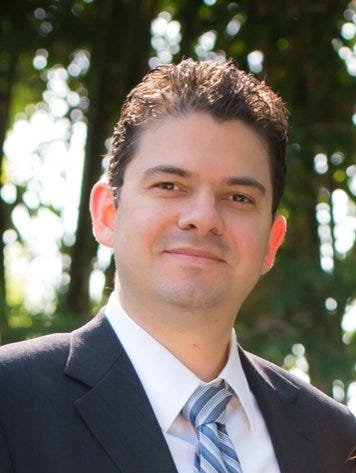
That Question Took Lidio from Patient to Entrepreneur
Today, donor selection relies heavily on HLA matching. The basic idea is straightforward - the closer the match, the better.
But the biology is far more complicated.
Not all mismatches carry the same risk. Some may be relatively well tolerated, while others could trigger serious immune complications like graft-versus-host disease.
The data needed to understand these differences already exists. What’s missing is a way to turn that data into a practical tool that clinicians can use when comparing potential donors.
Lidio saw an opportunity to use artificial intelligence to analyze the enormous amounts of genetic and transplant outcomes data to help answer that question. He founded Immunomatics to bring more precision to transplantation.
The company is developing AI-based software that goes beyond simply counting HLA mismatches. Its models analyze the molecular characteristics of donor-recipient differences, alongside data from transplant outcomes, to estimate the relative risk associated with incompatibilities.
The goal is straightforward: give transplant teams better information when making one of the most consequential decisions in the transplant process - selecting a donor.
A Bigger Opportunity
Lidio’s experience involved a blood stem cell transplant, but the underlying problem extends beyond one type of transplantation.
The stakes are enormous. Approximately one in five kidney transplants fails within five years, although the risk varies considerably by donor type and patient characteristics. For patients, graft failure can mean a return to dialysis, another transplant, or life-threatening complications.
Blood stem cell transplantation carries its own risks. Graft-versus-host disease (GVHD), a potentially life-threatening complication in which donor immune cells attack the recipient’s tissues, affects roughly 30–50% of patients in some transplant settings. And even after a successful transplant, the original blood cancer can return. Relapse rates can reach 30–50% in certain patient populations, particularly those with high-risk disease.
These complications have multiple causes, but donor-recipient compatibility plays an important role in transplant outcomes. Better understanding of immunological differences could help clinicians make more informed decisions about donor selection and patient management.
Immunomatics is developing technology for both blood stem cell and solid-organ transplantation. Its technology is designed to help clinicians evaluate compatibility more precisely, with applications that include donor selection and immunosuppression decisions.
Immunomatics received a $207,740 Phase I SBIR award from the National Institutes of Health and is collaborating with the University of California San Diego’s Immunogenetics and Transplantation Laboratory. The company has access to U.S. transplant registry data.
Now the focus is on turning that science into a validated clinical product through proof of concept, pilot programs with transplant centers, and further clinical validation.
For Lidio, the motivation remains personal. He experienced firsthand what it means to have your life depend on a donor decision. His scientific background gave him the tools to investigate the question his own transplant had raised.
It’s a problem worth solving.
What Comes Next
Immunomatics is currently raising capital through a Regulation Crowdfunding offering on Wefunder. The company will use the funding to advance product development, proof of concept, data partnerships, and clinical validation.
At the heart of Immunomatics is the question that began Lidio’s journey from patient to entrepreneur: How can we use the data we already have to make transplantation safer?
Links:
Invest in Immunomatics on Wefunder – wefunder.com/immunomatics
Visit our website – immunomatics.com